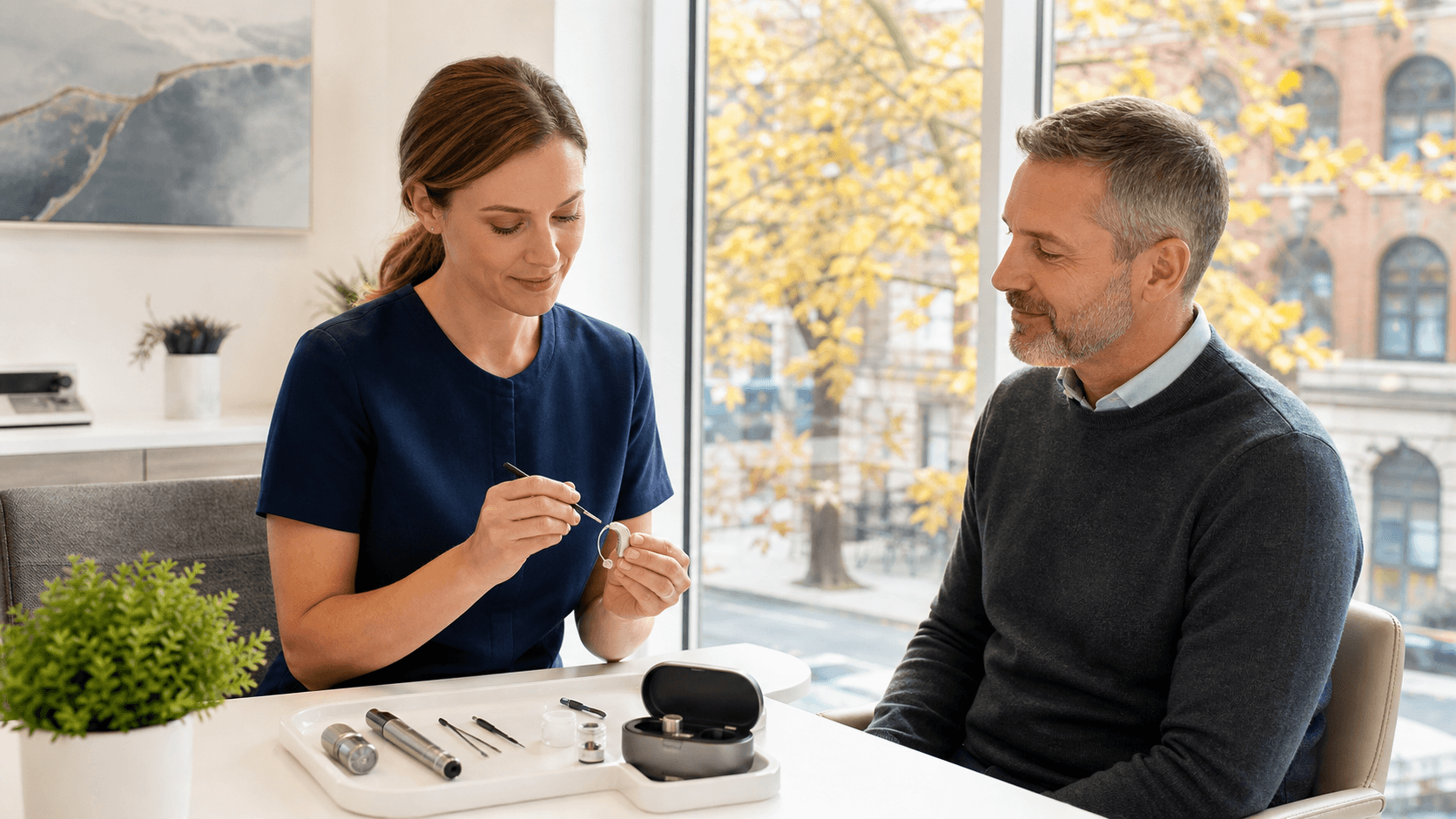
A Confident Start to Better Hearing
Your first hearing aid fitting should feel clear, calm and personal. Hearing changes can affect conversations, television, phone calls and time spent with family or friends, so our team takes time to listen before making recommendations.
At Manchester Hearing Aid & Earwax Removal Clinic in Didsbury, we offer a free initial consultation with our audiologist. During this consultation, we will talk through your hearing concerns, daily routines and listening goals, then explain your options in plain English. There is no need to arrive knowing which hearing aid you need.
Your Hearing Assessment Maps Your Listening Needs
A hearing assessment gives us a fuller picture of what you are finding difficult and why. Before any testing, we will ask about your general hearing experience, relevant medical history and the places where hearing feels most challenging. You may also wish to mention tinnitus, which can sound like ringing, buzzing or other noises in the ears.
Everyday situations we often discuss include:
- Following conversations with more than one person
- Turning up the television volume
- Hearing clearly on the phone
- Understanding speech in cafés, workplaces or family gatherings
- Noticing sounds such as doorbells or alarms
The hearing tests themselves are straightforward. They help identify which sounds may be harder for you to hear and how each ear responds. These results help us make recommendations that fit your own hearing needs rather than offering a one-size-fits-all answer.
If earwax is affecting your hearing or making testing less clear, we can identify this during the process and discuss the appropriate next step. Earwax can sometimes block sound from reaching the ear properly, so addressing it may be part of preparing for hearing care.
After reviewing the results, we will explain what they mean without pressure or confusing language. Your first appointment is a chance to ask questions, take in the information and understand the choices available to you.
Choosing Hearing Aids for Everyday Life
A hearing test result matters, but it is only one part of choosing a hearing aid. Comfort, the shape of your ears, how easily you can handle small controls, your style preferences, budget and the situations where you most want better hearing also shape our recommendations.
For example, someone who spends time in busy social settings may have different priorities from someone who mainly wants clearer television sound and easier phone conversations. The right choice is the one that makes sense for your life and that you feel comfortable wearing.
Common hearing aid styles can include:
- Behind-the-ear hearing aids, which sit behind the ear
- Receiver-in-canal hearing aids, with a small piece placed in the ear canal
- In-the-ear options, which are made to sit more discreetly in the ear
Each style has practical points to consider. Some may be easier to handle, while others may suit certain levels of hearing loss or personal preferences more closely. Our team will talk you through the differences so you can make an informed decision.
Modern hearing aids may also include rechargeable batteries, Bluetooth connectivity, phone streaming, directional microphones and noise management features. Rather than focusing on every available feature, we help you consider what you are likely to use day to day.
Your Hearing Aid Fitting in Manchester
At your fitting appointment, we begin by checking that your hearing aids sit comfortably and securely. A good physical fit matters because you are more likely to wear your devices regularly when they feel natural in your ears.
Using the results of your hearing assessment, we programme the hearing aids for your individual hearing profile. Settings can be adjusted to support clearer speech while keeping everyday sounds at a comfortable level. If something feels too sharp, too quiet or simply unfamiliar, tell us. Fine adjustments are a normal part of the fitting process.
Our audiologist will also show you how to manage your hearing aids safely, including:
- Inserting and removing them
- Charging them or changing batteries, where needed
- Using volume controls and other simple settings
- Cleaning them correctly
- Storing them safely when they are not being worn
New sounds can be surprising at first. Rustling paper, running water, traffic and your own footsteps may seem more noticeable because your brain has not heard them clearly for some time. This does not mean anything is wrong. Getting used to hearing aids takes patience, regular wear and support from us when adjustments are needed.
Follow-up Care Builds Listening Confidence
Your first fitting is the start of getting to know your hearing aids in real life. Follow-up appointments give you time to share what has gone well, what has felt difficult and where you would like more help. Further programming changes can be made, comfort checked and listening situations such as meals out, family events or work conversations discussed.
Ongoing care also helps keep your hearing aids working reliably. Regular cleaning, safe storage and good charging habits all matter. Earwax management is important too, as a build-up can affect comfort and sound quality. If you notice changes in how your hearing aids feel or sound, it is worth discussing them with an audiologist rather than trying to solve the issue alone.
Most importantly, allow yourself time. Hearing better is not about making every sound loud. It is about helping you feel more connected to the people, places and activities that matter to you.
Personalised Support for a Comfortable Fit
At Manchester Hearing Aid & Earwax Removal Clinic, we provide attentive care to help you get the most from your devices. Arrange your hearing aid fitting in Manchester with our experienced team and receive guidance tailored to your needs. For appointments or further information, contact us today.
Common Questions About First Hearing Aid Fittings
How Long Does It Take To Get Used To Hearing Aids?
Everyone adjusts at a different pace. Sounds can seem unfamiliar at first, especially in busy places. Wearing your hearing aids regularly as advised gives your brain time to become more familiar with clearer sound.
Should I Wear My Hearing Aids Every Day?
Regular use can help you become accustomed to your hearing aids and learn how they feel in different settings. Individual guidance will be based on your needs and comfort.
What Should I Do If Sounds Seem Too Loud?
Some sounds may stand out more at first, but you should not struggle in discomfort. Make a note of what you are hearing and discuss it at your follow-up, as programming adjustments may help.
Can Hearing Aids Support People With Tinnitus?
Some people with tinnitus also have hearing difficulties. During the assessment, we can discuss your symptoms and explain whether hearing aids may be part of your wider hearing care plan.
Who Fits Hearing Aids For First-Time Users In Manchester?
A qualified audiologist can assess your hearing, discuss suitable devices, fit and programme hearing aids, and provide follow-up support. Taking your questions to that first consultation can help you feel prepared, informed and more confident about the next step.