Start Hearing Clearly in Manchester
Hearing loss is far more common than many people realise, and it affects everyday life in quiet and noisy places across Manchester. When we ignore the early signs, conversations at work become harder, social events feel tiring, and confidence can slip. Acting early with the right hearing aids can make a real difference to how connected and independent you feel.
In this guide, we explain the main types of hearing aids, the latest technology, and typical hearing aid prices Manchester residents can expect. We also look at NHS and private options, how fittings work, and what ongoing care involves. As an independent audiology clinic based in Didsbury, Manchester Hearing Aid & Earwax Removal Clinic offers hearing tests, hearing aids, earwax removal and tinnitus support for people across the city.
Do You Need Hearing Aids? Signs, Tests and First Steps
Hearing loss often creeps in gradually. You might notice the TV creeping louder, or that busy pubs, trams and restaurants in Manchester are harder to follow. You may find yourself asking people to repeat themselves, feeling worn out after meetings, or hearing ringing, buzzing or hissing in your ears.
A professional hearing test at a local clinic usually starts with a chat about your symptoms, medical history and noise exposure. We then examine your ears to check for earwax or any visible issues. If wax is blocking the view of your eardrum or affecting test results, we can remove it using safe clinical methods before continuing.
The hearing test itself often includes pure tone audiometry, where you press a button when you hear beeps through headphones and, in many cases, speech testing that shows how well you understand words at different volumes. Your results are plotted on an audiogram, which we explain in plain language. From there, we can discuss whether NHS hearing aids might be suitable or whether private options, including custom hearing aids, would better match your hearing levels, lifestyle, or cosmetic preferences.
Types of Hearing Aids Available in Manchester
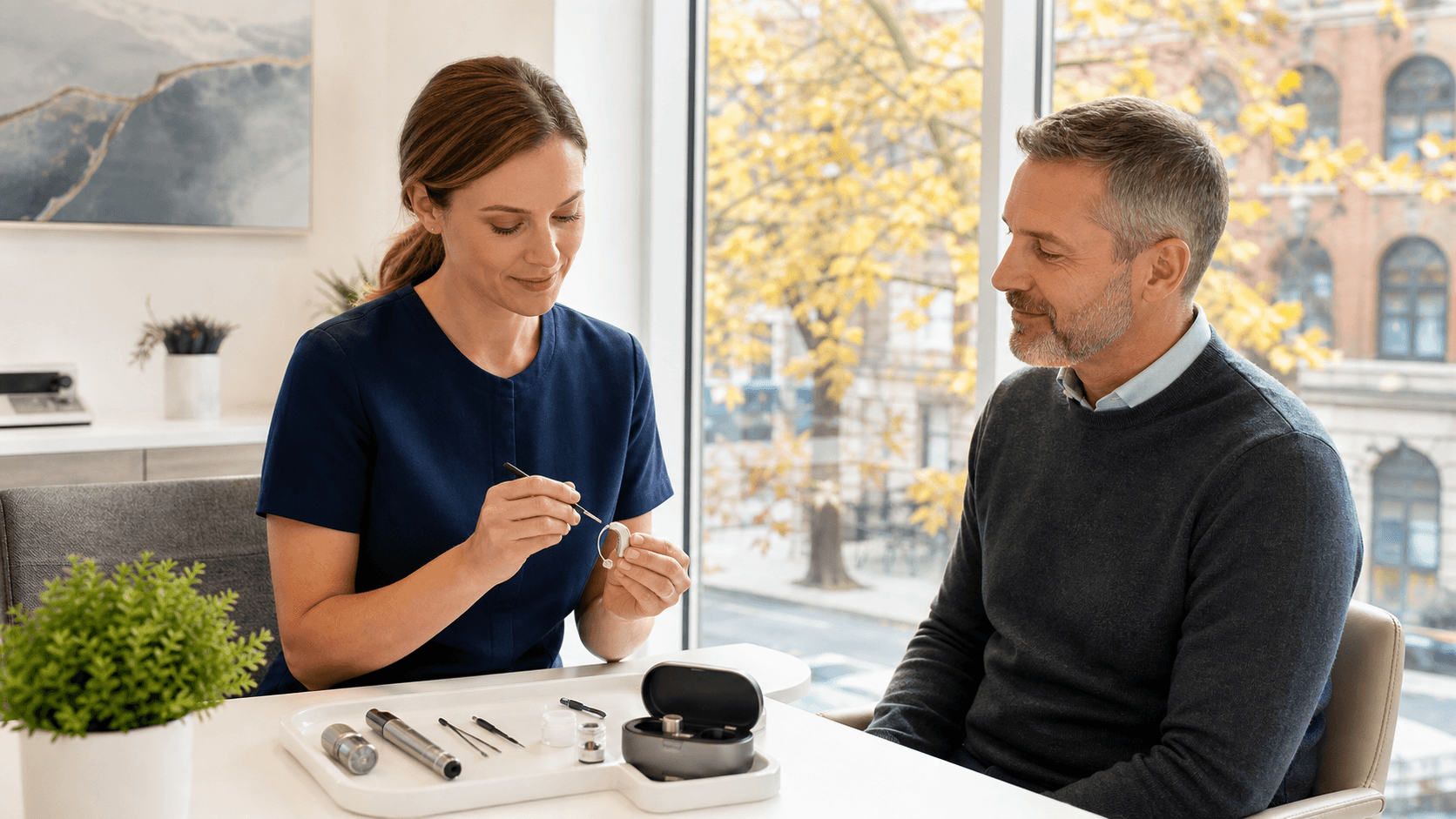
Hearing aids come in several main styles, all designed to make speech clearer and everyday sounds more comfortable. Behind-the-ear models sit behind the ear with a tube or thin wire into an earpiece, and they suit a wide range of hearing losses. Receiver-in-canal styles are similar but often smaller and more discreet, with good sound quality and flexibility.
In-the-ear hearing aids fill part or all of the bowl of the ear and are easier to handle for those with reduced dexterity. In-the-canal, completely-in-canal and invisible-in-canal options sit further into the ear canal, which many people like for cosmetic reasons, although the smallest versions may not suit more severe hearing losses or those who struggle with tiny controls.
Custom hearing aids are built from impressions of your ears, so the shell is tailored to your exact ear shape. This can give better comfort, a more secure fit and a very discreet appearance. In Manchester, custom hearing aids often suit people who wear glasses a lot, enjoy active hobbies, need something subtle for work, or have ear shapes that do not suit standard tips.
Latest Hearing Aid Technology, Features and Costs
Modern hearing aids are small digital computers that analyse sound hundreds or thousands of times per second. Clinicians usually talk about four broad technology levels: basic, mid, advanced and premium. All levels aim to improve speech, but higher levels tend to handle background noise more intelligently and automatically.
Common features now available include:
- Bluetooth connection to smartphones, TVs and laptops
- Control apps that let you adjust volume and settings discreetly
- Rechargeable batteries instead of regular disposable cells
- Directional microphones to focus on speech in front of you
- Tinnitus programmes that play gentle sounds to help mask ringing
- Remote fine-tuning, so minor adjustments can be made without always visiting the clinic
Below is a simple comparison of technology levels, features and typical hearing aid cost Manchester patients might discuss at a private clinic. These are general ranges, and exact prices depend on brand, style and package:
Basic
- Main features: good sound quality, simple background noise reduction, manual programmes
- Typical price per ear: lower private price range
- Best for: quieter lifestyles, mainly one-to-one conversations, budget-conscious users
Mid
- Main features: better noise control, more automatic settings, some Bluetooth options
- Typical price per ear: lower to middle private price range
- Best for: mixed quiet and social settings, occasional noisy places
Advanced
- Main features: stronger noise management, improved speech clarity in groups, wide Bluetooth and app features
- Typical price per ear: middle to higher private price range
- Best for: active social lives, frequent restaurants, offices or meetings
Premium
- Main features: most sophisticated noise handling, maximum automation, top sound customisation and connectivity
- Typical price per ear: higher private price range
- Best for: very busy lifestyles, complex listening needs, those wanting the most natural sound possible
Hearing Aid Prices, NHS vs Private, Insurance and Funding
NHS hearing aids in Manchester are usually available to people whose hearing test meets certain criteria after a referral through their GP or local audiology service. They are typically behind-the-ear models with reliable technology focused on clear speech and basic noise reduction. There is usually no charge for the devices themselves, although waiting times, repair processes and appointment flexibility can vary.
Private hearing aid prices Manchester residents see will depend on technology level, style and what is included. Packages often cover the initial hearing test, fitting appointments, follow-up visits, warranties and aftercare. When you compare hearing aid cost, it helps to think about the total cost of ownership: the upfront price, possible repair or replacement fees once warranties expire, earwax removal when needed, and whether you prefer rechargeable or disposable batteries. Hearing aids usually last several years with good care, although technology and hearing levels can change over time.
Health insurance in the UK sometimes includes limited cover for hearing tests and may offer a contribution towards hearing aids, but many policies exclude or cap this. It is important to check your wording carefully and note any claim limits or approved provider lists. Private clinics in Manchester may offer finance or payment plans, such as spreading payments over several months, or bundled packages that include extended aftercare. There can also be help available through schemes like Access to Work, disability benefits or charities, and we can often signpost you towards appropriate support.
Fitting, Follow-up and Looking After Your Hearing Aids Locally
The fitting process at a Manchester clinic usually begins with confirming that your ears are clear of wax, then agreeing on the right style and technology, including custom hearing aids where suitable. Custom devices require ear impressions, taken with soft material that sets briefly in the ear, which are then sent to the manufacturer to build your individual shells.
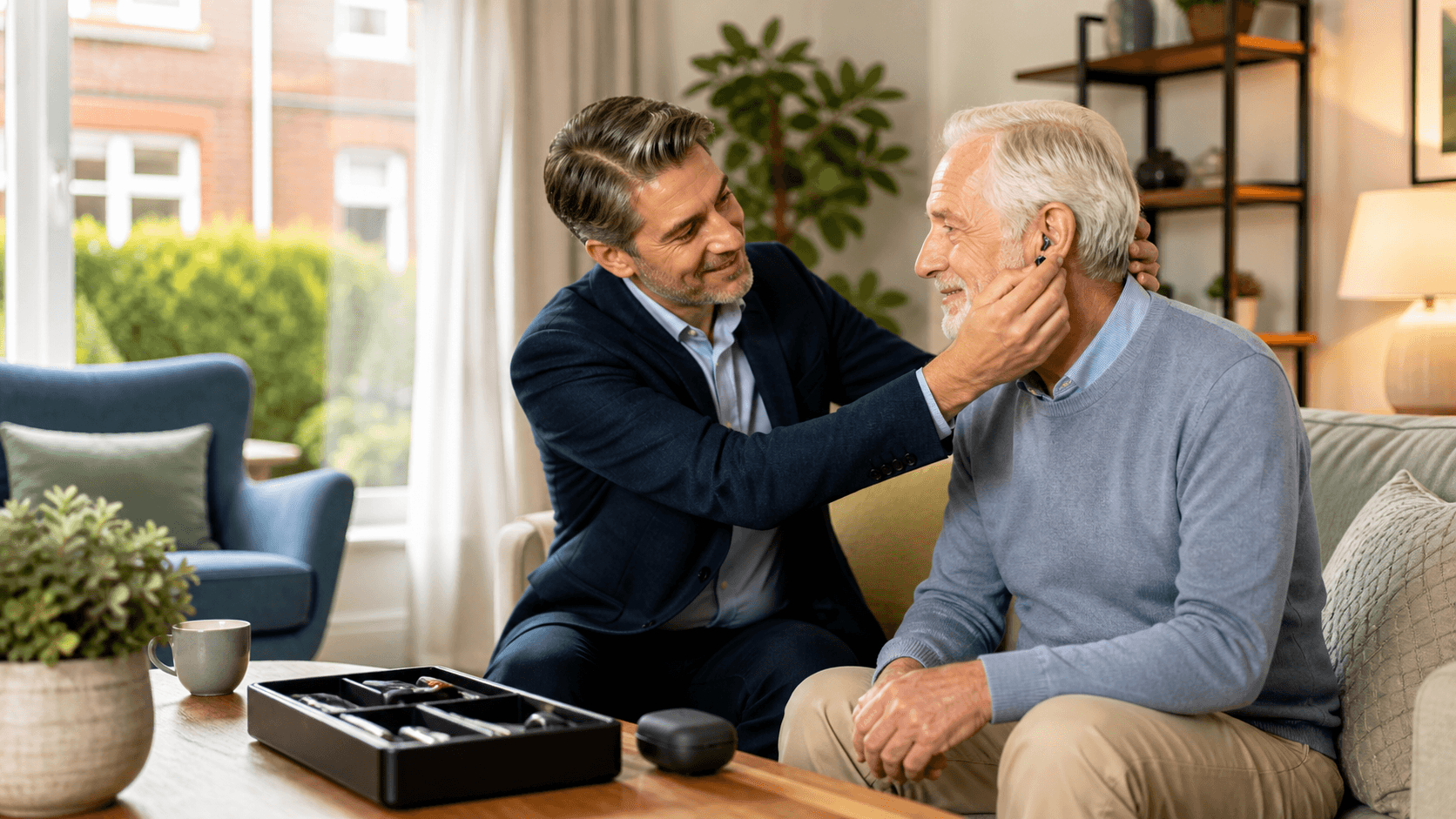
At the fitting appointment, the hearing aids are programmed to your audiogram. Many clinics perform real-ear measurements, placing a tiny tube in your ear canal so the audiologist can check that sound levels match the prescription. You can then try different listening situations in the clinic and give feedback on comfort and clarity. It is normal for sounds to feel different at first, so follow-up appointments are important for fine-tuning.
Daily care keeps your devices working well. Simple routines include:
- Wiping hearing aids with a soft dry cloth each day
- Keeping them dry and away from heat or direct sunlight
- Changing wax guards, filters and domes as advised
- Storing them safely in a case or charger when not in use
Custom hearing aids need particular attention to vents and sound outlets, as these can block with wax. As our ears can change shape slightly over time, you might eventually need new impressions for the best fit. Regular check-ups at a local clinic in Manchester help pick up issues such as reduced volume, whistling, visible damage or changes in your hearing.
Choosing a local independent audiology clinic means you are likely to see the same professionals each time, which helps build trust and understanding of your listening needs. At Manchester Hearing Aid & Earwax Removal Clinic in Didsbury, we provide earwax removal, comprehensive hearing assessments, tinnitus support and a range of hearing aid options, including custom solutions, to help you find the best hearing aids Manchester can offer for your hearing, lifestyle and budget.
Rediscover Clearer Hearing With Personalised Support
If you are ready to improve your hearing comfort and clarity, we can help you choose the right custom hearing aids for your lifestyle. At Manchester Hearing Aid & Earwax Removal Clinic, we take the time to understand your needs so your solution feels natural and easy to live with. Speak to our friendly team today to book an appointment or ask any questions through our contact page.