
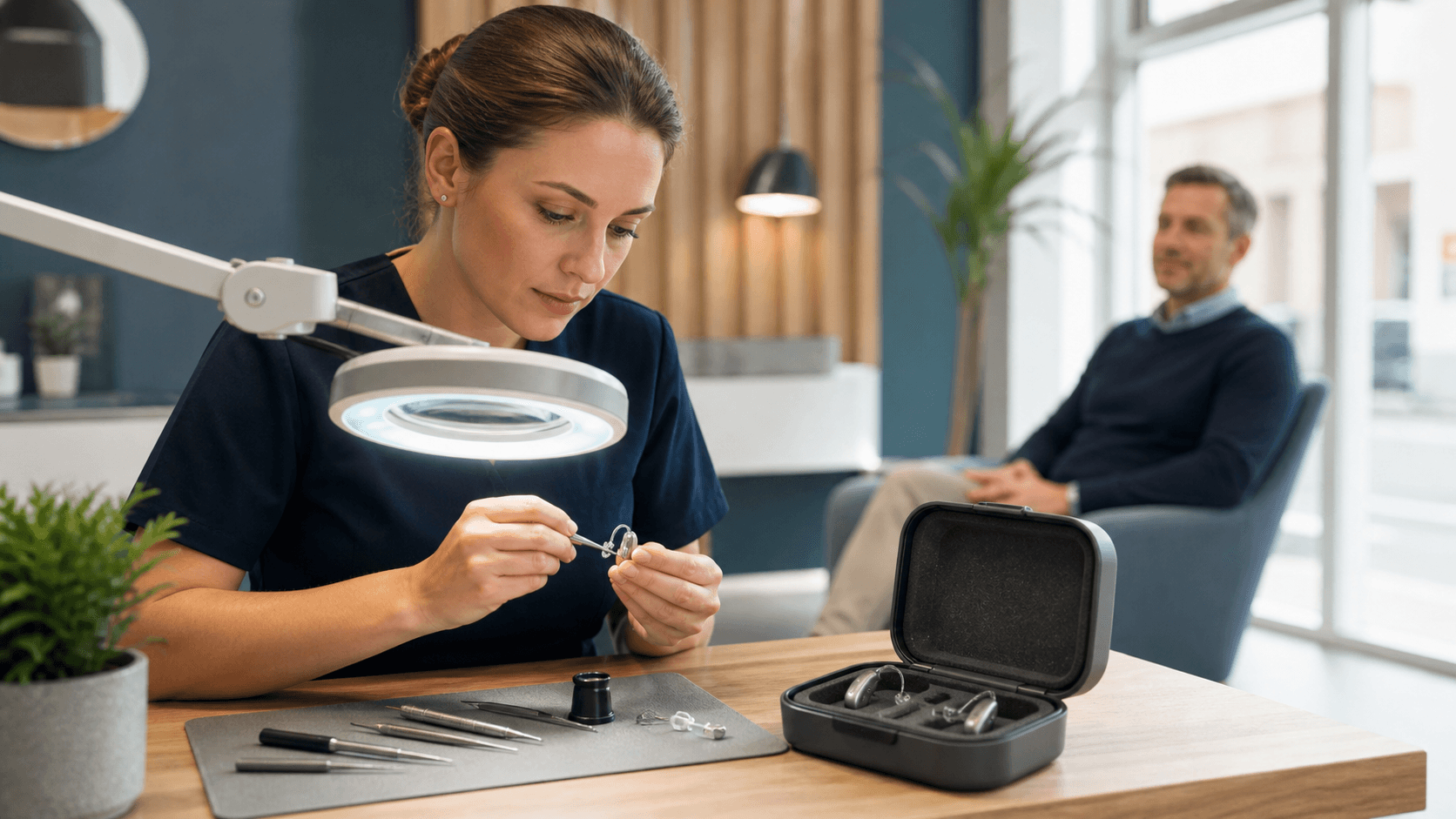
Get Back to Clearer Hearing Without Guesswork
A hearing aid that suddenly sounds quiet, distorted or completely silent does not always need replacing. Small issues with power, settings, wax guards or moisture can make a working device seem unreliable, and earwax can sometimes be the real reason hearing feels muffled.
From our Didsbury clinic, we support people who rely on their hearing aids for conversations, work, family time and everyday confidence. Here, we explain how to spot common problems, when professional hearing aid repair in Manchester may help and why it is worth checking your ears as well as the device. Sudden hearing loss, severe ear pain, dizziness or discharge needs urgent medical advice, rather than a routine hearing aid check.
Identify the Fault Before Assuming a Full Breakdown
Many apparent hearing aid failures have a straightforward cause. A disposable battery may be flat, a rechargeable aid may not be sitting properly in its charger, or a wax guard may be blocked. Tubing can become worn, moisture can affect delicate parts and settings may change accidentally.
Warning signs are useful because they help us narrow down what may be happening. You might notice:
- Sound cutting in and out
- Lower volume in one ear
- Whistling or feedback
- Distorted speech or background noise
- A rechargeable device that no longer charges as expected
It is also important to separate a device fault from a change in your hearing. Your hearing aid may be working as intended, while earwax build-up, an ear infection or a gradual change in hearing makes everything seem less clear. Feedback can also happen when wax changes the way sound travels in the ear canal.
Before seeing a specialist, make a brief note of when the problem started. Does it affect one aid or both? Did it begin after the device got wet, was dropped or had not been used for a while? Sharing what you have already tried helps us assess the situation more efficiently and avoids guesswork.
Safely Rule Out Everyday Hearing Aid Problems
A few careful checks can help rule out simple problems. Start by confirming that the device is switched on and that the battery compartment is properly closed. If you use disposable batteries, try a fresh one. For rechargeable aids, check that the hearing aid is correctly seated in its charger and that the charger itself is powered and dry.
You can also inspect the outside of the device using the cleaning tools and instructions supplied by the manufacturer. Look for visible wax around the earpiece, sound outlet or wax guard. If your hearing aid has tubing, check for obvious splits, hardening or condensation.
Take care with cleaning. We recommend avoiding:
- Pins, needles or sharp objects
- Liquid cleaners inside the device
- Cotton buds pushed into narrow openings
- Unapproved cleaning products
- Attempting to take apart the hearing aid yourself
Hearing aids contain small, sensitive components, so an overly enthusiastic clean can cause more damage than the original problem. When simple checks do not bring back clear sound, professional hearing aid repair in Manchester can help identify whether the issue is maintenance-related, a component fault or something that needs to go back to the manufacturer.
Check Whether Earwax Is Masking Your Hearing
Sometimes the hearing aid is not the problem at all. Earwax can block the ear canal and make a well-functioning device feel weak or ineffective. Because hearing aids sit close to the ear canal, they can also make people more aware of a blocked or pressured feeling.
Signs that earwax may be playing a part include muffled hearing, discomfort, feedback, a blocked sensation or hearing that has gradually worsened despite wearing your aid. Wax can also block the hearing aid's filter or guard, creating a second problem at the same time.
During an assessment, we can look at both your ears and your hearing aid to help work out the likely cause. When wax is present, professional earwax microsuction may help restore clearer hearing without the need for an unnecessary repair or replacement. Where availability allows, we offer same-day appointments for urgent earwax concerns.
Deep earwax should not be removed with cotton buds or other objects. Pushing items into the ear canal can compact wax further and may irritate the ear. A proper check can give you a clearer answer than trying to solve a blocked feeling at home.
Compare Repair, Servicing and Replacement Options
The right solution depends on the type of hearing aid, its age, the brand, its warranty status and the nature of the fault. Some issues are minor and may be resolved through professional cleaning, replacing worn consumable parts or adjusting the device's settings. More complex electrical or internal faults may need manufacturer repair.
Servicing can be a sensible option when the hearing aid still suits your needs and has otherwise been dependable. A check can help you consider whether the device is worth repairing or whether repeated problems suggest it is time to discuss another option.
A hearing test and conversation about new hearing aids may be helpful when:
- Your hearing has changed since your last review
- Speech sounds less clear even with a working device
- Your lifestyle needs have changed
- Tinnitus symptoms are becoming more noticeable
- Your hearing aid has had repeated faults
Our specialists provide personalised support, helping you understand what is happening rather than pushing you towards a quick assumption. Sometimes the answer is a small adjustment. Sometimes it is earwax removal, a repair or a review of whether your current technology still meets your hearing needs.
Protect Your Hearing Aid Through Autumn and Winter
Autumn and winter can be harder on hearing aids. Damp weather, rain and condensation from moving between cold outdoor air and warm indoor spaces can affect devices over time. Social plans, work events and family gatherings can also make reliable hearing support feel especially important.
Keeping your hearing aid in a dry, safe place when it is not being worn is a good habit. If a dehumidifier has been recommended for your device, use it as directed. Keep chargers away from moisture, and avoid leaving hearing aids in places that may become damp or very cold. A check before busy seasonal gatherings can help prevent avoidable disruption.
Rather than waiting for a complete failure, pay attention to small changes in sound, comfort or charging. Prompt assessment of earwax, hearing changes and device performance can help you stay connected and confident through the colder months.
Restore Clear, Reliable Hearing
At Manchester Hearing Aid & Earwax Removal Clinic, we can assess the issue and advise on the most suitable next step for your device. Book hearing aid repair in Manchester to get practical support tailored to your hearing needs. If you have questions before your appointment, contact us and our team will be happy to help.