Choose Power That Keeps You Hearing with Confidence
Rechargeable and disposable battery hearing aids can both be dependable choices. The best option is not always the newest one, but the one that fits comfortably into your normal day and is easy for you to manage.
At Manchester Hearing Aid & Earwax Removal Clinic in Didsbury, we help you consider your hearing needs, daily routine, hand dexterity, travel plans and the features you want to use. Many hearing aids now include personalised settings, Bluetooth streaming and tinnitus support, whatever power type they use. Following a professional hearing assessment, our audiologist can help you understand which style and power option may suit you.
How Rechargeable Hearing Aids Work Day to Day
Rechargeable hearing aids have built-in lithium-ion batteries. Rather than opening a battery door and fitting a small new cell, you place the hearing aids in their charging unit when you are not wearing them, usually overnight.
Many modern models are designed to provide a full day of wear after a full charge. However, the time you get from each charge can change depending on how you use them. Streaming phone calls, listening to media through Bluetooth and using tinnitus programmes may use more power during the day.
For many people, the appeal is simple: take the hearing aids out at night, place them in the charger, and they are ready again the next morning. Some models also have portable charging cases, which can be useful when you are away from home.
When discussing rechargeable hearing aids, Manchester patients often want to know:
- How long the hearing aids are expected to run on a normal day
- Whether a portable charger is available
- How long a full recharge takes
- What care the charger and hearing aids need
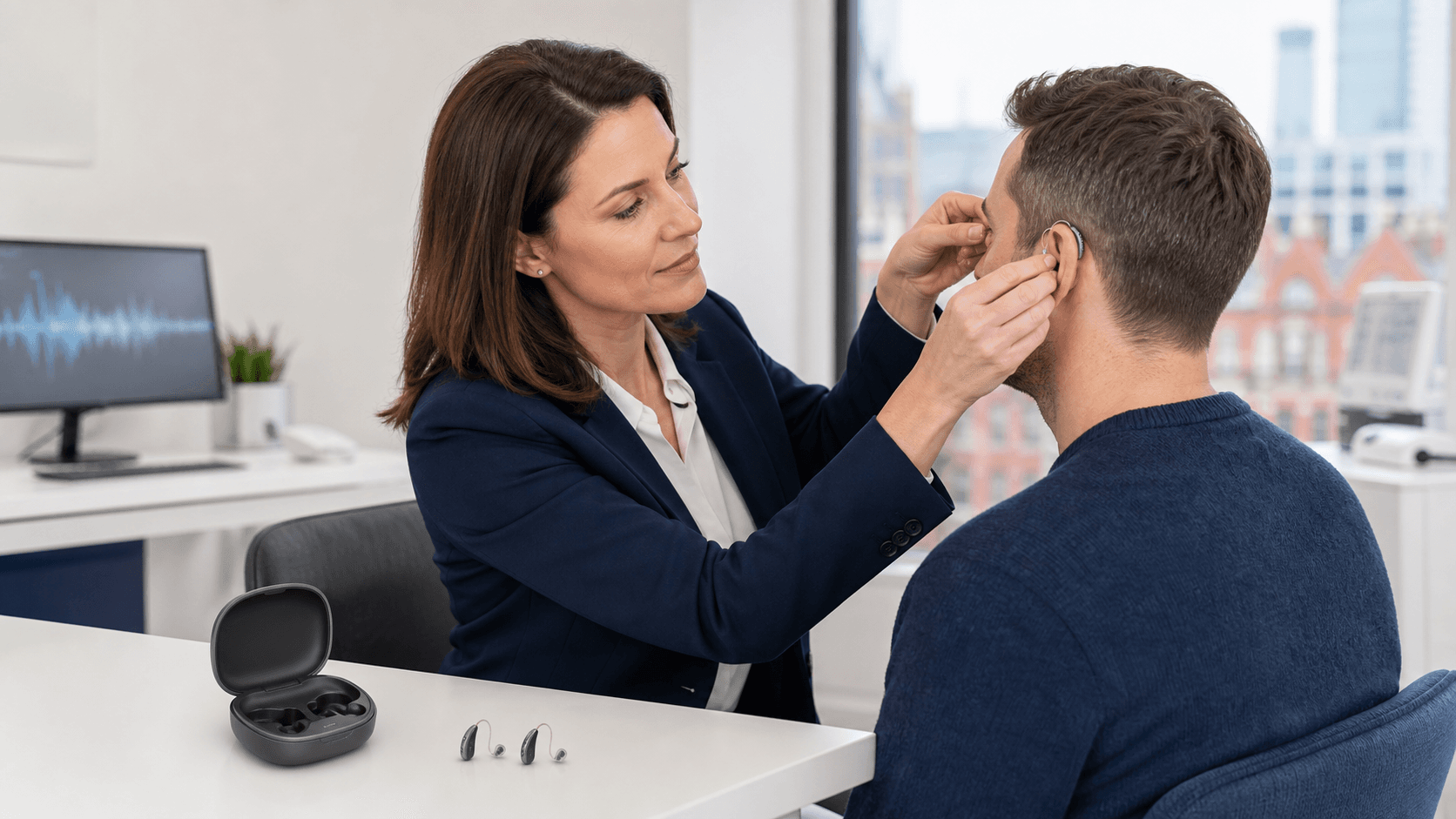
During a local fitting, we can show you how the charger works and make sure the routine feels manageable before you take your hearing aids home.
What Disposable Hearing Aid Batteries Offer
Traditional battery-powered hearing aids use replaceable zinc-air batteries. These begin working after you remove the protective tab and allow air to activate the battery. When the battery runs low, you remove it and fit a fresh one.
Common sizes include 10, 312, 13 and 675. The right size depends on the hearing aid model, and battery life can vary with the size of the battery, your hearing needs and the features you use. Bluetooth streaming, frequent phone calls and other advanced functions can all affect how quickly power is used.
Disposable batteries can offer welcome flexibility. If you are spending a long day out, travelling for an extended period or staying somewhere without easy access to a charger, carrying spare batteries may feel reassuring. Instead of waiting for a recharge, you can replace the battery when needed.
We can provide practical guidance on hearing aid batteries in Manchester, including how to identify the correct type for your device, how to store them and how to handle battery changes safely. Small batteries can be fiddly, so it is worth practising this task during your fitting rather than struggling with it later.
Compare Convenience, Ownership and Everyday Reliability
Both options rely on good habits. Rechargeable hearing aids need regular charging, while disposable battery hearing aids need you to notice when power is running low and keep suitable replacements nearby.
A rechargeable model can reduce the need to buy and fit small disposable batteries over time. On the other hand, a battery-powered device may appeal if you prefer having spares ready in a pocket, bag or travel case. The best choice often comes down to which routine feels more natural to you.
It is also sensible to think about the wider practical details:
- Rechargeable aids need access to their charger and a reliable place to charge
- Disposable battery aids need a supply of the correct battery size
- Streaming and long wear days can affect expected battery performance
- Chargers, batteries and hearing aids all need careful handling and storage
Environmental concerns may matter to you as well. Rechargeable hearing aids can reduce the number of used batteries produced over time. If you use disposable batteries, they should be recycled through suitable battery collection points rather than placed in household waste.
Match Your Hearing Aids to Your Lifestyle and Dexterity
Comfort and confidence matter more than choosing one power type over another. Hearing aids only help when you can wear and manage them consistently, so we take time to understand the small practical details of your everyday life.
Rechargeable hearing aids may be easier if you have arthritis, reduced vision or limited hand dexterity. There are no tiny battery tabs to peel off and no small battery door to open. Placing the hearing aids into a charger can feel simpler, especially once it becomes part of your evening routine.
Disposable batteries may be a better fit if you take longer trips, spend time in places with limited electricity or simply prefer the reassurance of carrying spares. Some people also like knowing they can change a battery quickly during a busy day.
Higher-demand users should consider power needs particularly carefully. If you stream calls or media often, use tinnitus support programmes, or wear your hearing aids through long working days, expected battery performance should be part of the conversation. We can talk through how you expect to use your hearing aids, rather than relying on a one-size-fits-all answer.
Ask the Right Questions at Your Hearing Aid Fitting
A hearing aid fitting is a chance to test more than sound quality. It is the right time to handle the devices, try the charger or battery compartment and ask what ongoing support may be needed.
Useful questions to raise include:
- How long should this rechargeable model last with my usual streaming use?
- How long does it take to recharge fully?
- Can I practise putting the hearing aids in and taking them out?
- Can I practise changing a disposable battery if I choose that option?
- What support is available for servicing, replacement chargers and hearing aid batteries in Manchester?
The right choice is the one you can use comfortably every day, whether that means placing your hearing aids on charge each night or carrying a small pack of replacement batteries. A careful fitting and an honest discussion about your routine can make that decision much easier.
Reliable Power Options For Everyday Hearing
At Manchester Hearing Aid & Earwax Removal Clinic, we can help you find dependable hearing aid batteries in Manchester that suit your device and routine. We also provide clear guidance on maintaining your hearing aids for consistent performance. If you would like personalised support, contact us to arrange an appointment.